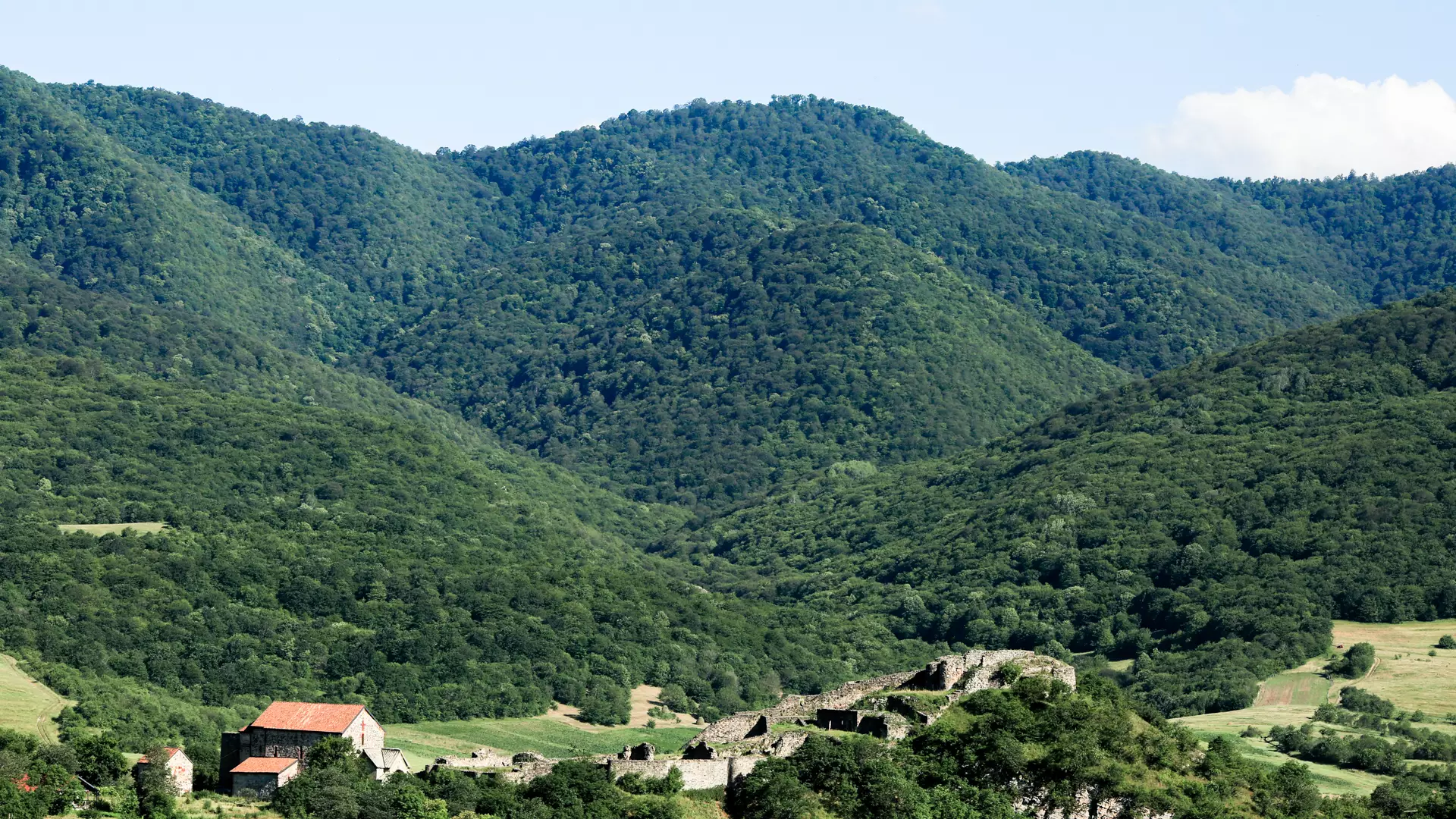
Dmanisi
Dmanisi is a historic site where ancient human skulls were found, and it's also home to a medieval gold hoard. The area offers a mix of history, architecture, and natural beauty.
Dmanisi is a place where ancient history comes alive. The discovery of 1.8 million-year-old human skulls, labeled Homo Georgicus, has made it a significant site for understanding human habitation in Europe.
Things to See
The site is home to a museum showcasing the Dmanisi 'Klondike', a gold hoard from the Middle Ages. Over 190 historical and architectural monuments, mostly from the Middle Ages, can be found in and around Dmanisi.
The ancient human skulls, now named Zezva and Mzia, are on display at the Georgian National Museum, offering a glimpse into the region's rich history.
Nature
Dmanisi is surrounded by natural beauty, including the Karagoli and Pantiani Lakes. The still waters of these lakes reflect the surrounding mountains, creating a breathtaking landscape.
How to Get There
To visit Dmanisi, you'll need to plan your trip in advance. While the exact details of getting to Dmanisi are not specified, it's likely that you'll need to travel to the region and then find local transportation to the site.
Highlights
- Ancient human skulls, Homo Georgicus, found on site
- Medieval gold hoard, the Dmanisi 'Klondike', on display
- Over 190 historical and architectural monuments to explore
- Karagoli and Pantiani Lakes offer stunning natural scenery
- Rich history and cultural significance
- Opportunity to see the ancient human skulls, Zezva and Mzia
- Unique chance to explore the cradle of European civilization
Gallery