
Truso Valley Hike: Season, Access and Tips for Kazbegi
The Truso valley hike is one of the most rewarding day walks near Kazbegi (Stepantsminda): an open, wild valley in the Greater Caucasus with mineral springs, rust-coloured travertine terraces and the ruins of old stone villages. This guide covers when to go, how to get there, what the trail is like and how to plan around Georgia's mountain weather, including what changes now that winter is here.
What is the Truso valley?
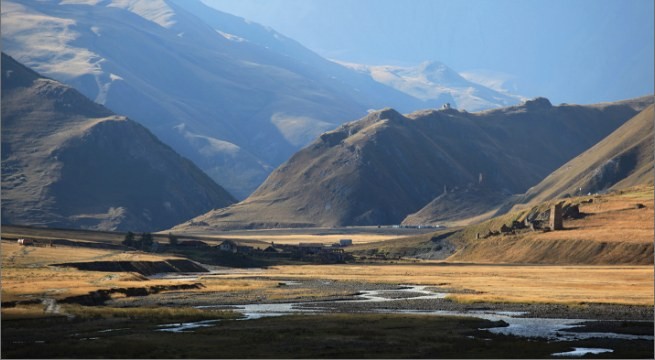
Truso (also spelled Trusso) is a high valley along the upper Terek River, reached from the Kazbegi area near the border region with South Ossetia. Unlike the busy Gergeti Trinity Church trail, it is quiet, and you spend most of the day walking through meadows and along the river rather than climbing steeply. Highlights usually include:
- Mineral springs and travertine terraces – orange and rust-coloured mineral deposits that look unlike anything else in the region.
- Abandoned villages and towers – stone settlements that give the valley an atmospheric, slightly haunted feel.
- Open mountain scenery – wide views with few other people on a weekday.
Because it is a remote valley, treat it as a proper mountain day, not a casual stroll, even though the gradient is gentle.
Best time for the Truso valley hike
The hiking season in the high Caucasus is short. As a rule of thumb, late spring to early autumn is the window when the trail and the access road are normally passable, with summer being the most dependable. Early in the season, snowmelt can leave stream crossings and muddy sections harder going; in autumn, days are shorter and weather turns quickly.
Always check current conditions with a local guide, your accommodation in Stepantsminda or a tour operator before you set out. Conditions in the mountains change from week to week, and we would rather you postpone than get caught out.
Winter note: can you hike Truso valley in winter?
We are now in the winter season (November to March). In general, snow and ice make the road into the valley and the trail unreliable at best, and the Kazbegi region sees heavy snowfall. Unless you are an experienced winter mountaineer with a local guide, plan the Truso valley hike for next season and do something else around Kazbegi now:
- Walk the lower, more accessible trails near Stepantsminda if conditions allow.
- Visit nearby Gudauri for skiing – it is on the Georgian Military Highway, the same road corridor that leads north to Kazbegi.
- Read our Juta and Chaukhi hike guide to compare another classic Kazbegi-area trek and its seasonal limits.
Even the Georgian Military Highway can close temporarily after heavy snow, so keep your schedule flexible and ask locally before driving.

How to get to the Truso valley
Most visitors base themselves in Stepantsminda, the main town of the Kazbegi area, which is reached from Tbilisi along the Georgian Military Highway. From there the access road toward the valley is rough in places, so your options are:
- Join a guided day trip. The easiest choice if you do not want to deal with the road or navigation. Local operators run Truso as a day out from Stepantsminda.
- Hire a local driver or 4x4 taxi in Stepantsminda for the road section, then hike from the trailhead.
- Drive yourself in a suitable vehicle, if you are confident on unpaved mountain tracks and have checked the road is open.
Guided option: Caucasus Travel
Caucasus Travel is a Tbilisi-based travel company whose roots go back to a group of mountaineers who founded the Georgian Guiding Service in the late 1980s, organising trips and taking part in rescue missions. That mountain background is relevant for a trip like this. Their programmes include tour days that feature the Truso valley, such as a Stepantsminda – Truso valley – Stepantsminda day. Browse their multi-day programmes such as Essential Georgia, Georgia on My Mind and The Land of the Golden Fleece; prices are listed as on request, so ask for a quote. Check the programme details to see which days include Truso. You can also visit their official website.
Self-drive option: renting a car
If you prefer your own wheels for the Kazbegi leg, Carex rents cars in Tbilisi, with online rental or on-site clearance, and a fleet that includes economy, middle and premium cars plus crossovers and SUVs. Listed examples include the Subaru Forester at 36.00 USD per day, the Ford Escape Hybrid at 34.00 USD per day and the Mitsubishi Pajero IO at 32.00 USD per day. Their website has more detail. Be honest with yourself about the track beyond Stepantsminda: ask the rental company and locals whether your chosen vehicle and the current road conditions are suitable before heading up. Remember that if you drive, you should not drink alcohol at all, including at a guesthouse supper with local wine, until you have finished driving for the day.

What to expect on the trail
Expect a long, mostly gentle valley walk where the main challenges are distance, weather and river crossings rather than steep climbs. Keep these points in mind:
- Start early. Mountain weather often deteriorates in the afternoon, and you need daylight to get back.
- Allow a full day. Between the drive, the walk and time at the springs and ruins, plan on most of the day.
- Be ready for wet feet. Streams can be fast and cold, especially after rain or snowmelt.
- Respect the border area. The upper valley is close to a sensitive border zone. Stay on marked routes, carry your passport or ID, and follow local guidance on where you may go.
- Leave no trace. The travertine terraces are fragile, so avoid walking on them where signs or your guide ask you not to.
What to pack for a Truso valley hike
- Sturdy waterproof hiking boots and a spare pair of socks
- Layers: a warm fleece, windproof and waterproof jacket, hat and gloves even in summer
- Plenty of water and lunch – there are no shops in the valley
- Sun protection, since high-altitude sun is strong
- A charged phone with offline maps, plus a small first-aid kit
- Trekking poles, which help on stream crossings and the way down
Combining Truso with the rest of Kazbegi
Many travellers spend two or three nights in Stepantsminda: one day for Truso, another for the Gergeti Trinity Church area or the Juta valley, and a rest or buffer day for weather. A buffer day is especially wise in shoulder seasons. If you want help assembling an itinerary, see the Tours in Georgia page for guided options across the country.
Frequently asked questions
Is the Truso valley hike difficult?
The gradient is generally gentle, but it is a long day at altitude with changeable weather and possible stream crossings. Reasonably fit walkers with proper footwear usually manage it; a guide makes it easier.
Do I need a guide for Truso valley?
It is not strictly required for everyone, but a guide or driver is useful for road access, navigation and the border-area rules. Going with a local operator is the simplest option.
Can I visit the Truso valley in winter?
Generally no. Snow and closed or unreliable roads make it unsuitable for ordinary visitors from late autumn to spring. Check conditions locally and consider skiing in Gudauri or visiting Kazbegi for views instead.
Where do I start the Truso valley hike from?
Most people base themselves in Stepantsminda and travel to the trailhead by guided transfer, local taxi or their own suitable vehicle, depending on current road conditions.
Plan your Kazbegi trip
If the Truso valley is on your Georgia list, decide first whether you want a guided day or a self-drive adventure, then build the rest of your route around it. Compare guided programmes and rental cars through GeoTravelMarket, and always confirm road and weather conditions before you go.
Related Services


Subaru Forester

Ford Escape Hybrid

Mitsubish Pajero IO
Want your Georgian travel business featured here?
We write about local tour operators, car rentals, wine experiences and unique services across Georgia. If you'd like your company featured in our blog, get in touch — or list your services directly and start receiving bookings.