
Public Transport in Tbilisi: Metro and Buses Explained for Visitors
Getting around the capital is easier than first-time visitors expect. If you are searching for public transport in Tbilisi: metro and buses, the short version is this: the metro is quick and simple, the city buses cover almost everything the metro does not, and a single reloadable card works on both. This guide explains how the system fits together, how to pay, which routes matter for visitors, and when it makes sense to switch to a taxi or a rental car instead.
Fares, routes and timetables change from time to time, so treat anything below as a practical orientation and check the current details at the station, on the card machines or in a live map app before you travel.
How Tbilisi public transport fits together
Tbilisi has three main layers of public transport that visitors will meet:
- The metro – an underground system with two lines that cross at a central interchange. It is the fastest way to move along the main north–south and east–west corridors of the city.
- City buses – numbered routes that reach neighbourhoods, hills and districts the metro never touches, including many places where you will want to go for views and food.
- Minibuses (marshrutkas) – smaller shared vans on set routes, often used by locals for longer hops and suburbs. They are less intuitive for visitors, so most travellers stick to the metro and buses.
For most short stays, the metro plus buses plus the occasional taxi is the sweet spot. Walking fills the gaps: the old town, Rustaveli Avenue and Sololaki are best explored on foot.
Riding the Tbilisi metro
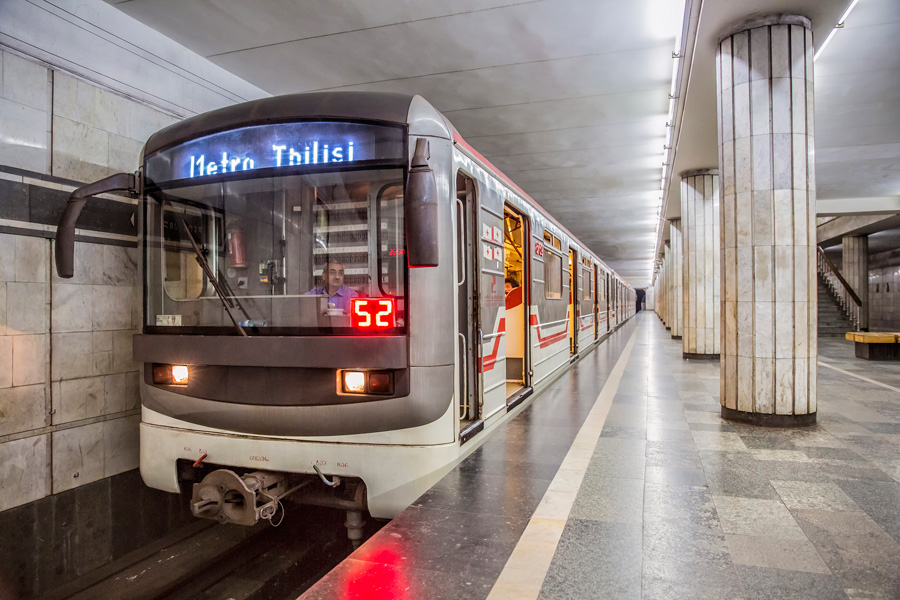
The Tbilisi metro is an easy introduction to the system. Stations are marked with a large letter M, and trains run on two lines, so you rarely need to think about more than which direction you are heading. Station names are shown in both Georgian and Latin script, so it is easy to follow your route on a map.
Tips for first-time metro riders
- Check the direction first. Look at the last station name on the platform signs and match it to your map before boarding.
- Expect deep stations and long escalators. Some stations are far below street level, so allow a few extra minutes when you are on a tight schedule.
- Avoid the busiest hours if you can. Mornings and early evenings on weekdays are crowded, especially on the line running through the city's busy residential districts.
- Keep your card handy. You tap in at the gates and usually do not need it again on exit, but keep it in case a check is made.
- Take care with bags. As in any capital, keep valuables zipped away in crowded carriages.
The metro is also the sensible way to reach the main bus stations. Travellers heading to the regions often use it to get to Didube and other departure points; our guide to Okriba Bus Station, its history, routes and travel tips covers the long-distance side of the story.
Using city buses in Tbilisi
Buses are where Tbilisi public transport becomes really useful. Many routes run across the river, up to residential hills and out to viewpoints, parks and shopping districts that the metro does not serve. Modern buses are marked with route numbers on the front and side, and bus stops often have shelters with the routes that stop there.
How to find the right bus
- Open a live transit map app on your phone and enter your destination. Apps that show real-time bus positions are far more reliable than printed timetables.
- Note the route number and the direction of travel, not only the number. The same route runs both ways, and the stops are often on opposite sides of the road.
- Stand at the stop, wave to the driver if the bus is about to pass without stopping, and board at the front.
- Tap your card on the validator as you board. Many buses also have a display showing the next stop.
- Press the stop button in good time, because drivers do not always wait long at stops.
If your phone has no data, download an offline map of Tbilisi before you leave your accommodation. A local SIM or eSIM costs little and makes bus travel far less stressful.

Paying: the transport card
Tbilisi uses a reloadable contactless card system for the metro and municipal buses. You buy a card at metro station counters or from machines, then top it up with cash or by other methods the machines offer. The same card is used on both metro and buses, and the system is designed so that connecting between them is cheaper than paying two separate full fares.
- Buy the card on arrival. It is inexpensive, so keep it for your whole stay and top it up as needed.
- Load a little at a time. A modest balance covers most short city days, and you can always add more.
- Share cautiously. One card can often be used for more than one person if you tap it separately for each rider, but check how the validator treats this before relying on it.
Because fares have been adjusted in the past, confirm the current price on the station board or ticket machine rather than trusting a figure from an old blog post.
Useful routes and areas for visitors
Rather than memorising numbers, think in terms of areas:
- Old town and the river: Use the metro to reach the central interchange, then walk. The sulphur baths, Narikala hillside and Abanotubani are all reachable on foot from the centre.
- Rustaveli Avenue: The main cultural boulevard, with museums, theatres and cafés. A metro station sits right on it, which makes it the easiest central meeting point.
- Station Square and the railway station: The metro connects directly, which is handy if you arrive by train or are heading to a regional bus departure.
- Airport: Tbilisi's airport is outside the metro network. Most visitors use a taxi app, a pre-arranged transfer or a bus connection; see our guide to taxi apps in Georgia for how Yandex Go and Bolt work in practice.
- Hillside and viewpoint areas: This is where buses and taxis beat the metro. Check the live map for the bus that goes closest, then walk the last stretch.
Winter notes for Tbilisi transport
From November through March, Tbilisi can be chilly, damp and occasionally icy. Public transport keeps running, but a few habits help:
- Allow extra time when it rains or snows, since buses move more slowly and stops can be crowded.
- Wear shoes with a decent grip. Station steps, wet marble and hillside pavements can be slippery.
- Carry a light layer; the metro is often warmer than the street, but waiting at a bus stop is not.
- If you plan a day trip to the mountains, check road and weather updates first. City transport tells you nothing about conditions on the high passes.

When public transport is not enough
Public transport in Tbilisi is excellent for the city itself, but Georgia's best scenery often lies outside it. Wine villages in Kakheti, the Georgian Military Road, Mtskheta and mountain villages are not served well by city buses. You have three sensible options:
- Take a guided trip. Caucasus Travel, based on Peritsvaleba Street in Tbilisi, lists cultural journeys such as Essential Georgia, Georgia on My Mind and The Land of the Golden Fleece, with prices on request. You can also visit the official Caucasus Travel website. Browse more options on our tours in Georgia page.
- Rent a car for the days you leave the city. Carex is based at 76 Akaki Tsereteli Ave and lists vehicles such as the Subaru Forester at 36.00 USD per day, the Ford Escape Hybrid at 34.00 USD per day and the Mitsubish Pajero IO at 32.00 USD per day. Their website has more details. A practical plan is to use the metro and buses for the city days and collect a car only when you head out; parking in the centre is more trouble than the car is worth.
- Combine bus and taxi. For one-off trips, a taxi app is often cheaper and faster than waiting for a connecting bus.
If you do drive, remember that local roads can be busy and mountain roads demanding in winter. Never drink and drive, even if a day out includes a wine tasting; designate a driver or book a guided trip instead.
Planning to continue west after Tbilisi? Our guide to Kutaisi from Tbilisi, with onward transport to Batumi explains your options.
Practical tips to save time and money
- Plan your day by neighbourhood so you make as few transfers as possible.
- Use the metro for long distances, buses for the last stretch and walking for the centre.
- Keep small change and a charged phone with you.
- Ask the driver or a local if you are unsure; most people are happy to help even with limited English.
- Check the live map before you leave, since service changes can happen during roadworks or events.
FAQ
Is the Tbilisi metro easy for tourists?
Yes. There are only two lines, station names are shown in Latin script as well as Georgian, and trains are frequent. The main challenges are deep stations and crowded weekday rush hours.
Can I use the same card on the metro and buses?
Yes. The reloadable transport card is designed to work on both the metro and municipal buses. Check the current fare and any transfer rules at the station or ticket machine.
Does the metro go to Tbilisi airport?
No. The airport is outside the metro network, so most visitors take a taxi or a pre-booked transfer. Taxi apps are widely used and are explained in our taxi apps guide.
Do I need a car in Tbilisi?
Not for the city itself. Metro, buses, taxis and walking cover most visits. A rental car or a guided trip makes more sense for day trips beyond Tbilisi.
Plan your Georgia trip
Once you have the city transport sorted, you can spend your energy on the things that matter: food, views and the people. When you are ready to go beyond the capital, GeoTravelMarket lets you compare local tours and rental options in one place, so you can mix easy city days with a well-planned journey into the countryside.
Related Services


Subaru Forester

Ford Escape Hybrid

Mitsubish Pajero IO
Want your Georgian travel business featured here?
We write about local tour operators, car rentals, wine experiences and unique services across Georgia. If you'd like your company featured in our blog, get in touch — or list your services directly and start receiving bookings.