
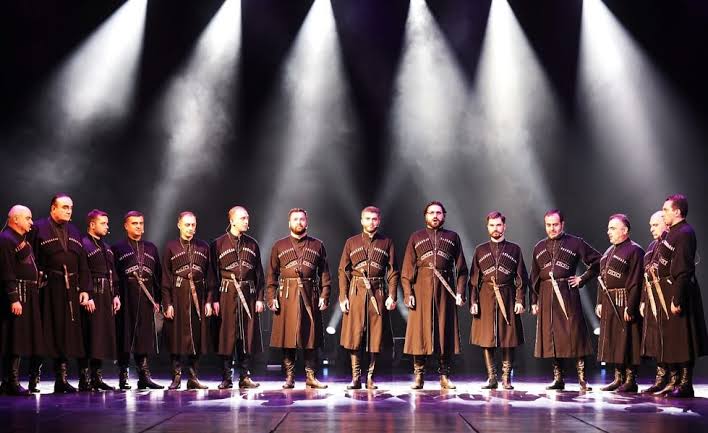
Georgian Polyphonic Singing: Where to Hear It in Georgia
If you want to hear Georgian polyphonic singing in person, plan for more than a concert ticket. This is a living tradition: men's voices braided into three independent lines, sung at supras (feasts), in village churches, at harvest and at funerals. UNESCO recognised it as a masterpiece of the world's oral and intangible heritage, and for many visitors a single unplanned moment, a table of strangers suddenly breaking into song, ends up as the highlight of the whole trip. This guide explains what makes the music special, how the regional styles differ, and how to actually find good singing in Georgia.
What is Georgian polyphonic singing?
Most European folk music has one melody with accompaniment. Georgian songs usually have three voices that each carry their own melody, moving against one another and meeting in tense, dissonant chords before resolving. Many songs are sung a cappella, usually by men, although women's and mixed singing exists too, especially in the western regions.
The tradition is widely believed to be very old and is closely tied to the Georgian table and the Orthodox church. Chant in Georgian churches uses the same three-part logic, so you can hear it in a monastery liturgy as well as in a restaurant. One recording, the harvest song Chakrulo, was even included on the Voyager spacecraft's Golden Record as an example of human music.
The three-voice idea in plain words
- Two upper voices trade the melody, often with ornamented, decorated lines.
- A bass holds a drone that gives the song its ground.
- The voices frequently clash on purpose. That gritty harmony is the signature sound and is not a mistake.
Regional styles worth knowing
Georgia is small, but the singing changes dramatically from valley to valley. You do not need to be an expert, but knowing a few labels helps you ask for the right thing.
- Kakheti (east): long, slow table songs with a drone bass and flowing upper voices. Wine country is the natural home of the supra song, so if you are in Kakheti you will hear a lot of it.
- Guria (west): famous for its lively, complex style with a very high, yodel-like voice known as krimanchuli, set over two other parts. It feels almost improvised and playful.
- Svaneti (northwest mountains): archaic, heavy and ritual in feel, often connected to old pre-Christian and church traditions. It is a very different sound from the lowlands.
- Samegrelo, Imereti and Racha: each has its own repertoire, from work songs to dance songs and laments.
- Urban songs: Tbilisi has its own romantic, city-style songs that borrow from folk traditions but sound lighter.
Instruments such as the panduri and chonguri (plucked string instruments), the doli drum and the salamuri flute appear in some songs, but the voice is the core of the tradition.

Where to hear Georgian polyphonic singing
1. At a supra
The supra is the Georgian feast, led by a tamada (toastmaster), and singing is part of how it works. If you are invited to a family table, in a guesthouse in the countryside, you may well hear it spontaneously. Hosts are often proud to share a song, and if you show real interest, you may be taught a line. Do not demand a performance, and do not film people without asking.
2. Folk ensemble concerts in Tbilisi
Tbilisi has folk and song-and-dance ensembles that perform in theatres, restaurants and small venues. Check the schedule locally, because evening programmes change by season and we cannot promise what is on for your dates. A good concert gives you the clearest picture of all the regional styles in one evening, which is helpful for a first listen.
3. Church services
Sacred chant is a central part of Georgian polyphony. If you visit a working church or monastery, for example around Tbilisi or Mtskheta, you may hear chanting during a service. Treat it as worship, not a show: dress modestly, stay quiet, cover your head if you are a woman and ask before taking photos.
4. Wine country in Kakheti
Many wine cellars and family guesthouses in Kakheti add a song or two to a tasting or a long lunch. It is one of the most relaxed ways to hear the music, and the setting suits it: the songs were made for the table.
5. Mountain villages in Svaneti
Svaneti is the place to look for the old, austere songs. It is remote, so timing and transport matter, and in winter the roads can be hard. Ask your guesthouse host whether any singers are available. Do not assume there will be a show.
Learn the music: workshops and lessons
Some visitors want to do more than listen. Several singers and groups offer short workshops where you learn a simple folk song, usually a bass or a middle line first. These are best booked ahead or through your guesthouse or tour operator. Do not expect to master it in an hour, but singing even one verse alongside Georgians is memorable and a good way to understand how the three parts depend on each other.
Building a trip around Georgian polyphonic singing
You can fit this theme into a standard first-time itinerary. A simple outline:
- Tbilisi (2 days): see a folk ensemble performance, walk the old town and eat at a restaurant that has live traditional music.
- Mtskheta: visit the ancient church complex and, if you are lucky, hear chanting at a service.
- Kakheti (1-2 days): combine wine tasting and a long lunch in a family cellar, where songs are often part of the hospitality.
- Western Georgia (optional): Imereti and Guria for a very different, livelier choral sound.
- Svaneti (optional, longer trip): for the archaic mountain songs and spectacular scenery.
If you prefer someone else to handle logistics and context, a guided cultural trip can help. Caucasus Travel is a Tbilisi-based travel company whose roots go back to a group of mountaineers and friends who founded the Georgian Guiding Service in the late 1980s. Its cultural programmes, such as Essential Georgia, Georgia on My Mind and The land of the golden fleece, are listed on GeoTravelMarket as cultural experiences with prices on request. These are general cultural tours, so ask the operator directly if you want singing, a supra or a church visit built into the route. You can also browse its official website or look through other tours in Georgia to compare options.

Getting around: by car and by guide
Villages with the most authentic singing are not always on a bus line. A rental car gives you flexibility to reach Kakheti or Mtskheta on your own schedule. Carex is a Tbilisi rental company with economy, middle and premium cars as well as crossovers and SUVs, and offers online booking or on-site handover; see carex.ge for more. Listed examples on GeoTravelMarket include the Mitsubishi Pajero IO at 32 USD per day and the Subaru Forester at 36 USD per day.
Important: never drink and drive. Kakheti trips often involve wine tastings and toasts at the supra. If you plan to drink, hire a driver, join a tour, or let one person stay completely sober. Georgian roads can be winding and unlit, and the toasts at a feast are frequent.
Winter notes
It is winter in Georgia from November through March, and singing does not stop with the season. In fact, long winter evenings around a table are a classic setting for it, and restaurants and concert halls in Tbilisi stay active. If you head to the mountains, such as Svaneti or the Kazbegi area, check road and snow conditions before setting out, allow extra time and consider hiring a local driver or a 4x4. Lowland Kakheti is usually easier in winter, though vineyards are bare and some small guesthouses may have limited hours, so confirm in advance.
Etiquette tips for listeners
- Ask before filming or recording, especially in churches and at private tables.
- Do not talk over the singers. Silence in the first moments is the best compliment.
- If you are invited to join, try. Georgians appreciate effort more than perfect pitch.
- A small tip or a purchase from the performers is appropriate after a paid show.
- Learn a few words, such as gaumarjos (cheers) and madloba (thank you), and use them.
Frequently asked questions
Is Georgian polyphonic singing on the UNESCO list?
Yes. UNESCO recognised Georgian polyphonic singing as a masterpiece of the oral and intangible heritage of humanity, and it later appeared on UNESCO's intangible heritage list.
Do I need to speak Georgian to enjoy it?
No. The music works without translation, and at a concert or restaurant hosts will often introduce the songs in English. At a supra, someone nearby will usually explain what a song is about.
When is the best time to hear it?
Any time of year. Summer and autumn bring festivals and the grape harvest, while winter has cosy indoor evenings. Just check schedules for specific concerts before you go.
Can I hear it without a tour?
Yes, in Tbilisi it is easy to find folk performances independently. For villages and private tables, a local guide or a good guesthouse host helps a great deal.
Plan your trip
Georgian polyphonic singing is best experienced slowly: a long evening, good company and a willingness to listen. If you want help shaping a route around it, ask a local operator such as Caucasus Travel about culture-focused tours, and use GeoTravelMarket to compare options before you book.
Related Services


Want your Georgian travel business featured here?
We write about local tour operators, car rentals, wine experiences and unique services across Georgia. If you'd like your company featured in our blog, get in touch — or list your services directly and start receiving bookings.